


The Bible predicts that the Antichrist will confirm a 7-year covenant with Israel, and possibly many others.
27 And he will confirm a covenant with the many for one week, but in the middle of the week he will put a stop to sacrifice and grain offering; and on the wing of abominations will come the one who makes desolate, until a complete destruction, one that is decreed, gushes forth on the one who makes desolate.” (Daniel 9:27 NASB)
7 Years
In this passage, one “week” refers to a week of years, namely, 7 years. The word “week” doesn’t translate in an exact way to English, as it can refer to any group of seven time periods.1 Nevertheless, context dictates that this “week” is a week of years, not days.
The previous verses give other prophecies about a 7-week period and a 62-week period, both pertaining to the Jews and Jerusalem. When we look at how those were was fulfilled in history, it becomes quite clear that a week is 7 years.2
Furthermore, the entire prophecy is given in response to Daniel’s prayer about 70 years. Therefore, the angel’s response likewise pertains to a group of years, not days.
“According to Daniel 9:27, the seven years preceding the Second Coming of Christ will begin when a covenant is made with Israel by the Antichrist.”
Dr. John Walvoord, 19913

The Antichrist
The “he” that confirms the covenant refers back to verse 26. There, it states that a people group associated with a particular ruler will destroy Jerusalem and the temple. This happened in 70 A.D., when the Romans sacked Jerusalem and burned the temple, killing hundreds of thousands of Jews in the process.4
and the people of the prince who is to come will destroy the city and the sanctuary. (Daniel 9:26b NASB)
Notice, it does not say “the prince who is to come” will destroy the city and sanctuary. On the contrary, it says the “the people of the prince who is to come” will do this. The people were the Romans. Therefore, the “prince who is to come” will be associated with the Romans. This is already clear from Daniel 7, where the Antichrist rises to lead a restored Roman Empire in the end times.
“In order to have the authority to make such a covenant, the Antichrist must already possess the position of head king of the confederated Revived Roman Empire before making the covenant (Dan. 7:8, 20, 23-25).”
-Dr. Renald Showers, 19825
To Make or Confirm?
When speaking of forming a covenant, the Hebrew Bible usually uses the words to “cut” a covenant. That is not the word used here. The word here means something to the effect of “to be strong, be mighty, or prevail.”6 It is in the causative tense, which means the subject causes the event to come about.
Therefore, it reads “cause to be strong” or “cause to prevail.” The Greek translation of the Old Testament used during the time of Jesus uses the Greek word for “strengthen.”7 Therefore, the Antichrist does not necessarily “sign a 7-year peace treaty.” Rather, he may create a new covenant or enforce a covenant that’s already in existence, but for 7 years. As the NET Bible footnotes say:
“The Hiphil of גָבַר (gavar) occurs only here and in Dan 9:27, where it refers to making strong, or confirming, a covenant.”
-NET Bible Notes8

Promise of Military Protection
Other verses on this covenant indicate that the covenant will include a promise of protection for the Jews and Jerusalem. In chapter 28 of the book bearing his name, Isaiah speaks of this “covenant with death.”
14 Therefore, hear the word of the Lord, you scoffers,
Who rule this people who are in Jerusalem,
15 Because you have said, “We have made a covenant with death,
And with Sheol we have made a pact.
The gushing flood will not reach us when it passes by,
Because we have made falsehood our refuge and we have concealed ourselves with deception.” (Isaiah 28:14-15 NASB)
In this passage, God condemns Israel’s leaders for making a “covenant with death” and a “pact” with Sheol (the grave). They assume that when the “gushing flood” comes through, they will not be touched by it, due to their false sense of security. In the Bible, floods and water are often used as symbols of invading armies. You can also see this in Revelation 12, when Satan pours out water to pursue the woman (Israel) who is fleeing to the desert.9
The text goes on, saying that they will be trampled by the gushing flood.
18 Your covenant with death will be canceled,
And your pact with Sheol will not stand;
When the gushing flood passes through,
Then you will become its trampling ground.
19 As often as it passes through, it will seize you;
For morning after morning it will pass through, anytime during the day or night,
And it will be sheer terror to understand what it means.” (Isaiah 28:18-19 NASB)
This will be a protection treaty with Israel. However, it will be a false protection, as the Antichrist will go on to betray them halfway through his 7-year covenant of protection with them (Dan. 9:27b).
“…in this covenant Antichrist will commit himself and his western Roman army to the military protection of Israel”
-Dr. Renald Showers, 198210
Antichrist, on behalf of his empire, will make a treaty with the nation of Israel. This agreement probably entails a promise of protection in return for certain favors (likely including those of an economic nature).
-Stephen Miller, 199411
Rider on the White Horse
This pact could be related to the rider on the white horse, found in Revelation 6:1-2.
6 Then I saw when the Lamb broke one of the seven seals, and I heard one of the four living creatures saying as with a voice of thunder, “Come!” 2 I looked, and behold, a white horse, and the one who sat on it had a bow; and a crown was given to him, and he went out conquering and to conquer. (Revelation 6:1-2 NASB)

This refers to a conqueror who rides out in the end times, holding a bow. This is in contrast to the rider on the red horse, who comes out causing people to kill each other. Therefore, we can infer that the conquest by the rider on the white horse may not involve bloodshed. In fact, it may be a peaceful conquest through the promise of military protection. As Dr. Robert L. Thomas says:
It is better to take the absence of arrows from the description as a symbol of bloodless victory. The bow indicates that war is threatened, but never actually occurs because victory is accomplished through peaceful means (Scott; Walvoord). Worldwide peace is the condition at the end of the first-seal period, because of the results of the second seal is to take that peace away (cf. 6:4).
-Dr. Robert L. Thomas12
Current Application
The European Union’s foreign policy program, the European Neighborhood Policy (ENP), is funded by the 7-year NDICI-Global Europe instrument.13 Israel and many other nations are partner countries in the NDICI-Global Europe Instrument.14 This program is 7-years because it corresponds to the length of the EU budget, which recurs every 7 years. The next cycle is set to start on January 1, 2028, and go until the end of 2034.15 As you can see here, a map of the ENP partner countries looks suspiciously like a map of the Roman Empire at its greatest extent. 1617
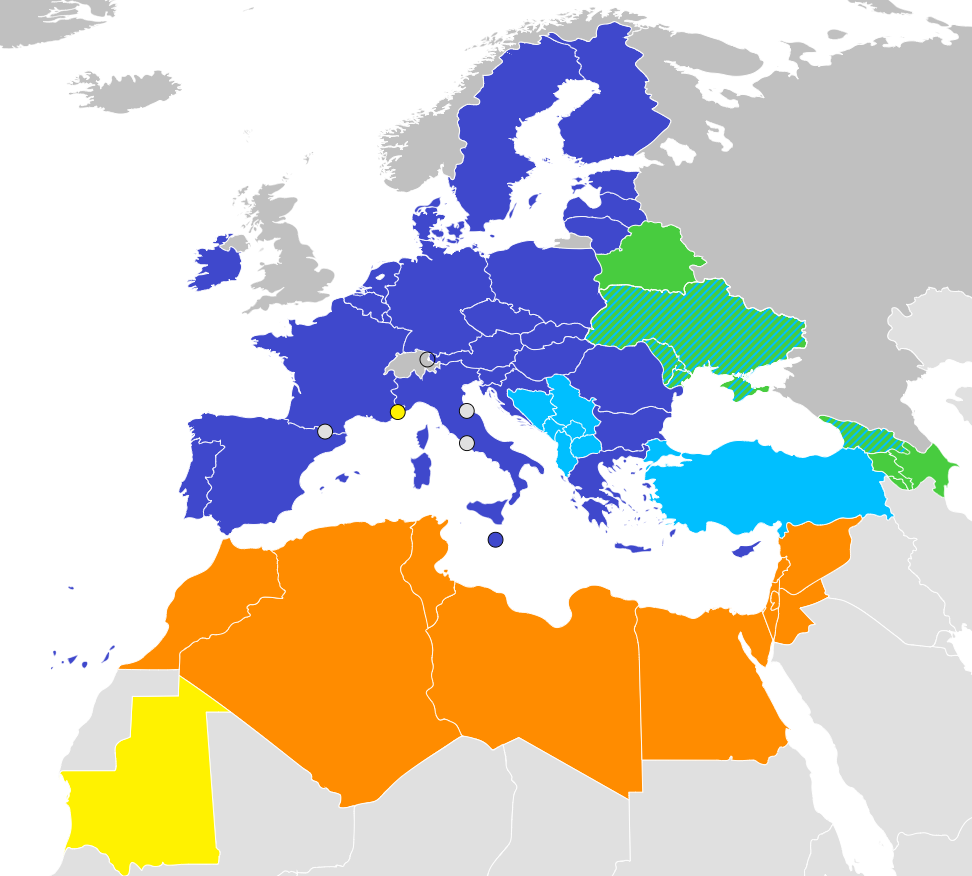
The EU designs tailor-made agreements with many countries in the Global Europe Instrument. Some of these include Partnership Priorities documents, wherein the EU and the partner country agree on things they want to work on for mutual benefit. Others include even deeper relationships such as the Strategic and Comprehensive Partnership agreements. Egypt’s relationship to the EU is a good example of a relationship where the Partnership Priorities were upgraded to an even deeper relationship.18
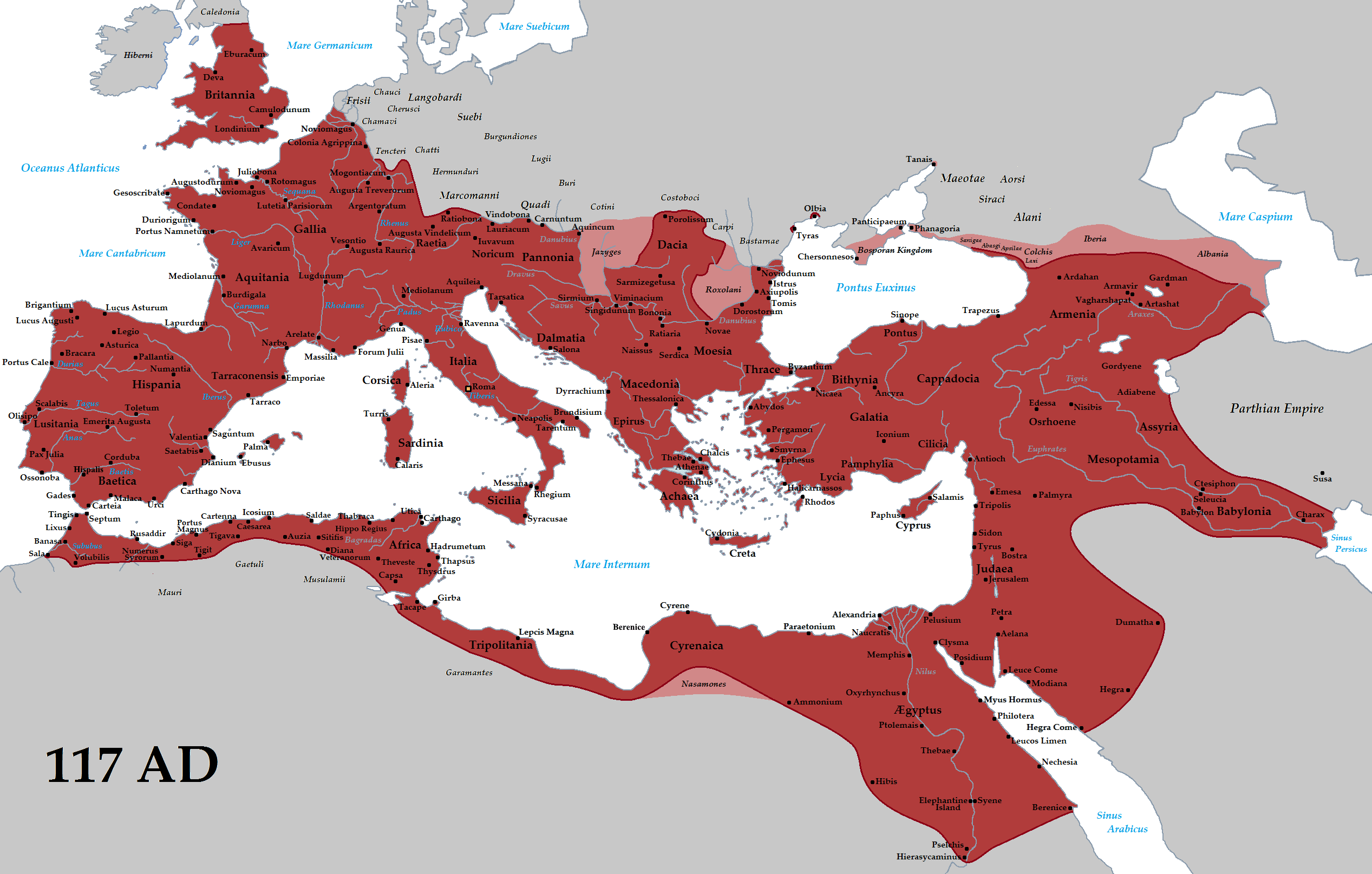


These mutual agreements are framed as being mutually beneficial to both the EU and the partner country. Furthermore, the EU has the new Pact for the Mediterranean, where it wants to work with Southern Mediterranean countries on mutual priorities, such as security, migration management, and stronger economies.1920 Nevertheless, you can see how such agreements give the impression that the EU is drawing the participant country into its imperial orbit.
Some of the EU’s past attempts at stabilizing its neighborhood with these financial incentives have been met with mixed results. They have revised the program multiple times, to no avail. This has caused some analysts to declare the ENP obsolete.21
What To Watch For
All this may change once the EU gets enough hard power to enforce peace agreements with its neighbors. The European Union and European powers are urgently looking for a way to enforce “security guarantees” for Ukraine during an eventual ceasefire agreement.22 In theory, they could provide such a package to Israel and Palestine as well. Even more interestingly, they could provide such a guarantee to the whole Mediterranean area, or even other conflict zones in the world.
With the EU’s leadership finally enforce protection in neighboring countries for a period of 7 years?
Tanner, J P. 2020. Daniel: Evangelical Exegetical Commentary. Edited by H W. House, and William D. Barrick. Bellingham, Washington: Logos Bible Software. (p. 545-546)
Tanner, J P. 2020. Daniel: Evangelical Exegetical Commentary. Edited by H W. House, and William D. Barrick. Bellingham, Washington: Logos Bible Software. (p. 545-546)
Walvoord, John F. Major Bible Prophecies: 37 Crucial Prophecies That Affect You Today. Grand Rapids, MI: Zondervan, 1991. (p. 317)
Showers, Renald E. 1982. The Most High God: A Commentary on the Book of Daniel. Bellmawr, New Jersey: The Friends of Israel Gospel Ministry, Inc.
Tanner, J P. 2020. Daniel: Evangelical Exegetical Commentary. Edited by H W. House, and William D. Barrick. Bellingham, Washington: Logos Bible Software. (p. 593)
Tanner, J P. 2020. Daniel: Evangelical Exegetical Commentary. Edited by H W. House, and William D. Barrick. Bellingham, Washington: Logos Bible Software. (p. 593)
Showers, Renald E. 1982. The Most High God: A Commentary on the Book of Daniel. Bellmawr, New Jersey: The Friends of Israel Gospel Ministry, Inc.
Miller, Stephen B.. Daniel: An Exegetical and Theological Exposition of Holy Scripture (The New American Commentary Book 18) (p. 279). B&H Publishing Group. Kindle Edition.
Thomas, Robert L. Revelation 1–7: An Exegetical Commentary. Wycliffe Exegetical Commentary. Chicago: Moody Publishers, 1992. (p. 423)