

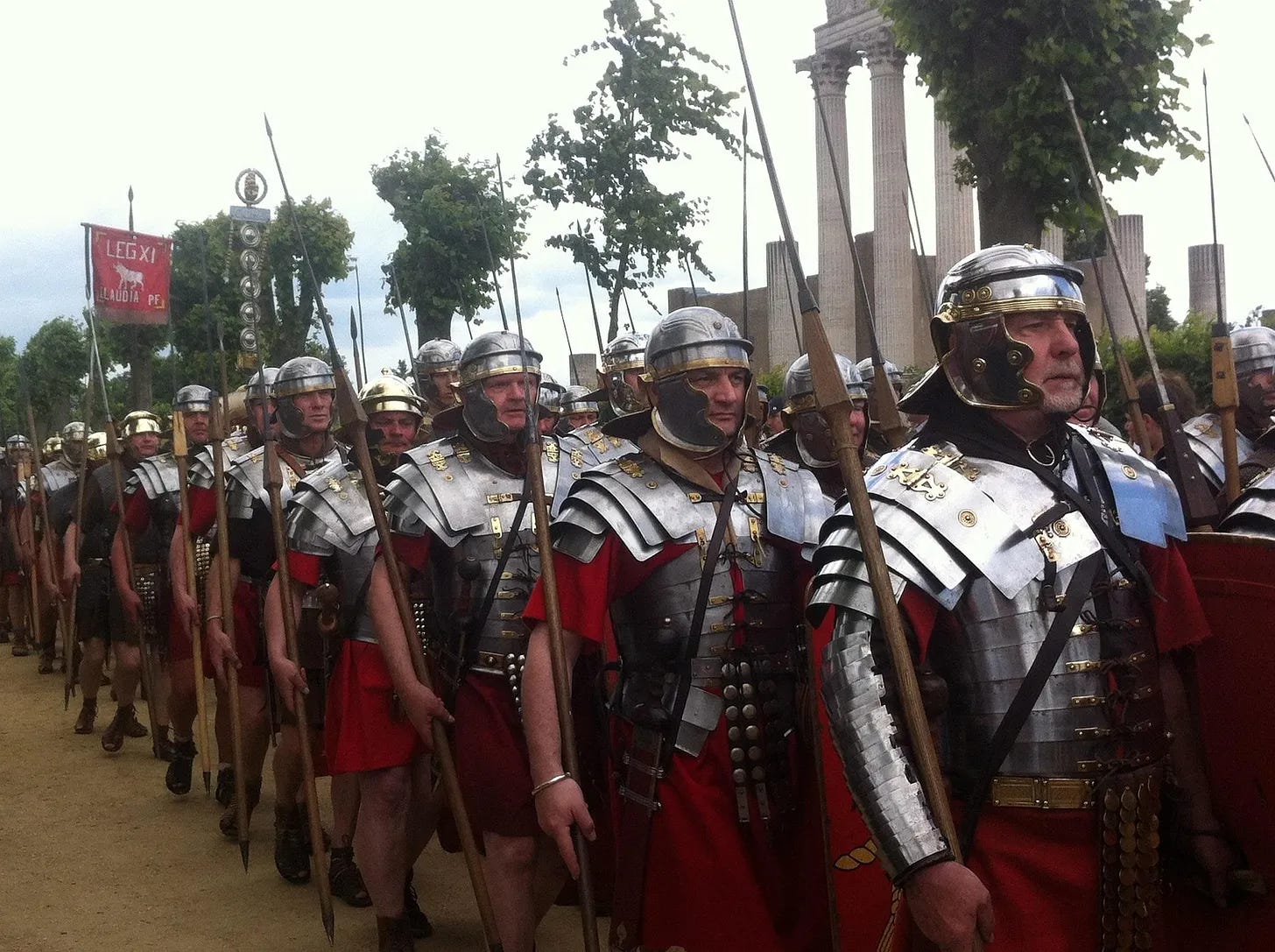
The Bible predicted the rise of the historical Roman Empire. In Daniel 7, the prophet sees a vision of four beasts coming up out of the Mediterranean Sea.
The First Three Empires in Daniel 7
Daniel 7 opens with the prophet Daniel having a vision at night.
2 Daniel said, “I was looking in my vision by night, and behold, the four winds of heaven were stirring up the great sea. 3 And four great beasts were coming up from the sea, different from one another. (Daniel 7:2-3 NASB)
“The great sea” is a Biblical term for the Mediterranean Sea. (Numbers 34:7; Joshua 1:4). So, these beasts, which represent empires, are coming up out of the Mediterranean Sea. These four beasts also correspond to the sequence four kingdoms mentioned in Daniel 2.
Babylon
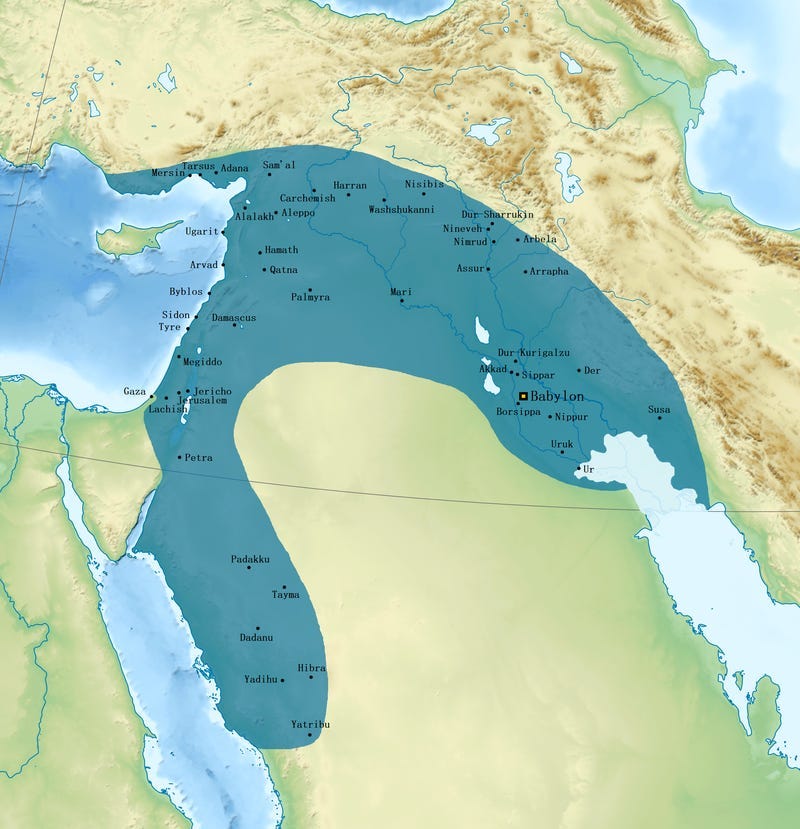
4 The first was like a lion but had the wings of an eagle. I kept looking until its wings were plucked, and it was lifted up from the ground and set up on two feet like a man; a human mind also was given to it. (Daniel 7:4 NASB)
The first beast represents Nebuchadnezzar’s Babylon, for three main reasons. First, Daniel 6 talks about how, due to his pride, Nebuchadnezzar was forced to eat grass like an ox for seven periods of time. Then his mind and kingdom were restored to him. Second, a lion was one of the most prominent symbols in Babylon.1 Finally, since this is the first of four beasts, it corresponds with the first of the four kingdoms in Daniel 2, which is explicitly identified with Nebuchadnezzar’s Babylon (Dan. 2:37-38).
Medo-Persia
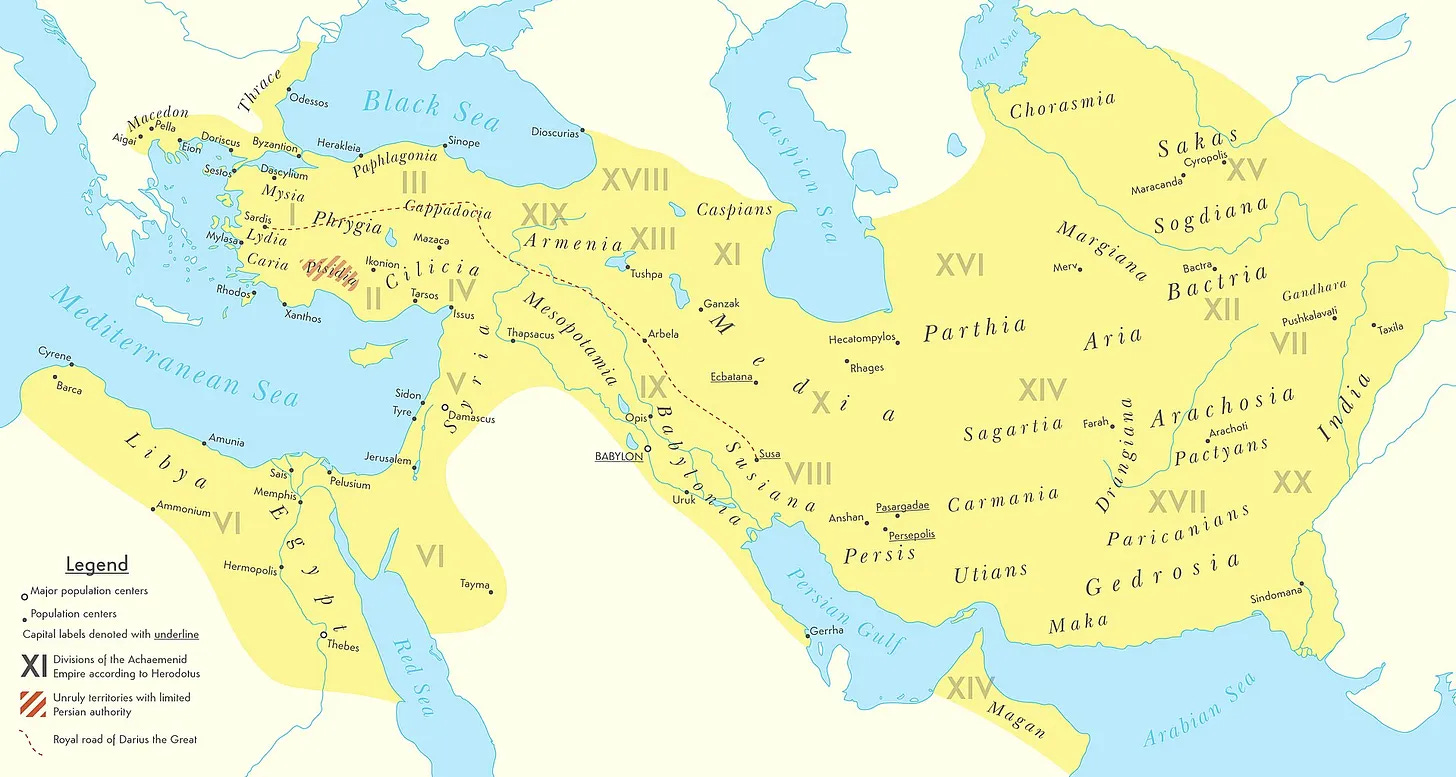
5 And behold, another beast, a second one, resembling a bear. And it was raised up on one side, and three ribs were in its mouth between its teeth; and they said this to it: ‘Arise, devour much meat!’ (Daniel 7:5)
The lopsided bear naturally fits the Medo-Persian empire. In the alliance, the Persian side became more prominent and dominant than the Median side.2
Critical scholars like to say that this represents the Median empire only.3 However, the book of Daniel consistently treats the Medes and Persians as one empire. This is especially true, since Daniel 8 treats the Medo-Persian empire as one animal. Therefore, the conservative explanation that this represents Medo-Persia (not Media alone) makes the most sense.
Greece
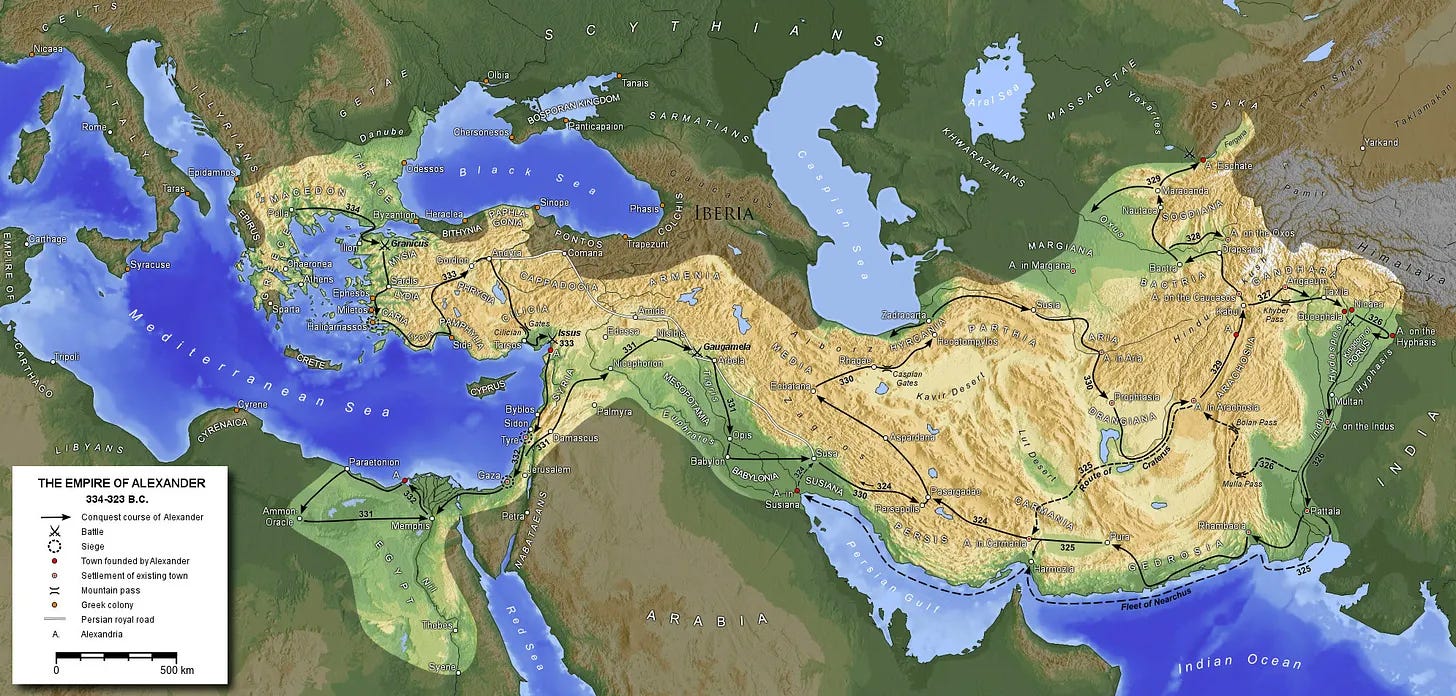
6 After this I kept looking, and behold, another one, like a leopard, which had on its back four wings of a bird; the beast also had four heads, and dominion was given to it. (Daniel 7:6)
This represents the Hellenistic Empire under Alexander the Great and his successors. Leopards are very fast and would be even faster with four wings. This represents the great speed of Alexander’s conquests.4 The four heads represent the four successor kingdoms that dominated the Hellenistic world after Alexander’s death.5 This fits Daniel 8 quite well, as a goat (representing the Greek kingdom) has four horns on its head. Historically, the Greek empire landed on four kingdoms after the battle of Ipsus in 301 B.C.6
Notice how the leopard has four heads, even though the four heads (Alexander’s successors) didn’t reign until after his death. This shows how beast imagery can compress time. This is true of the fourth beast as well, which represents the Roman Empire.
Roman Empire
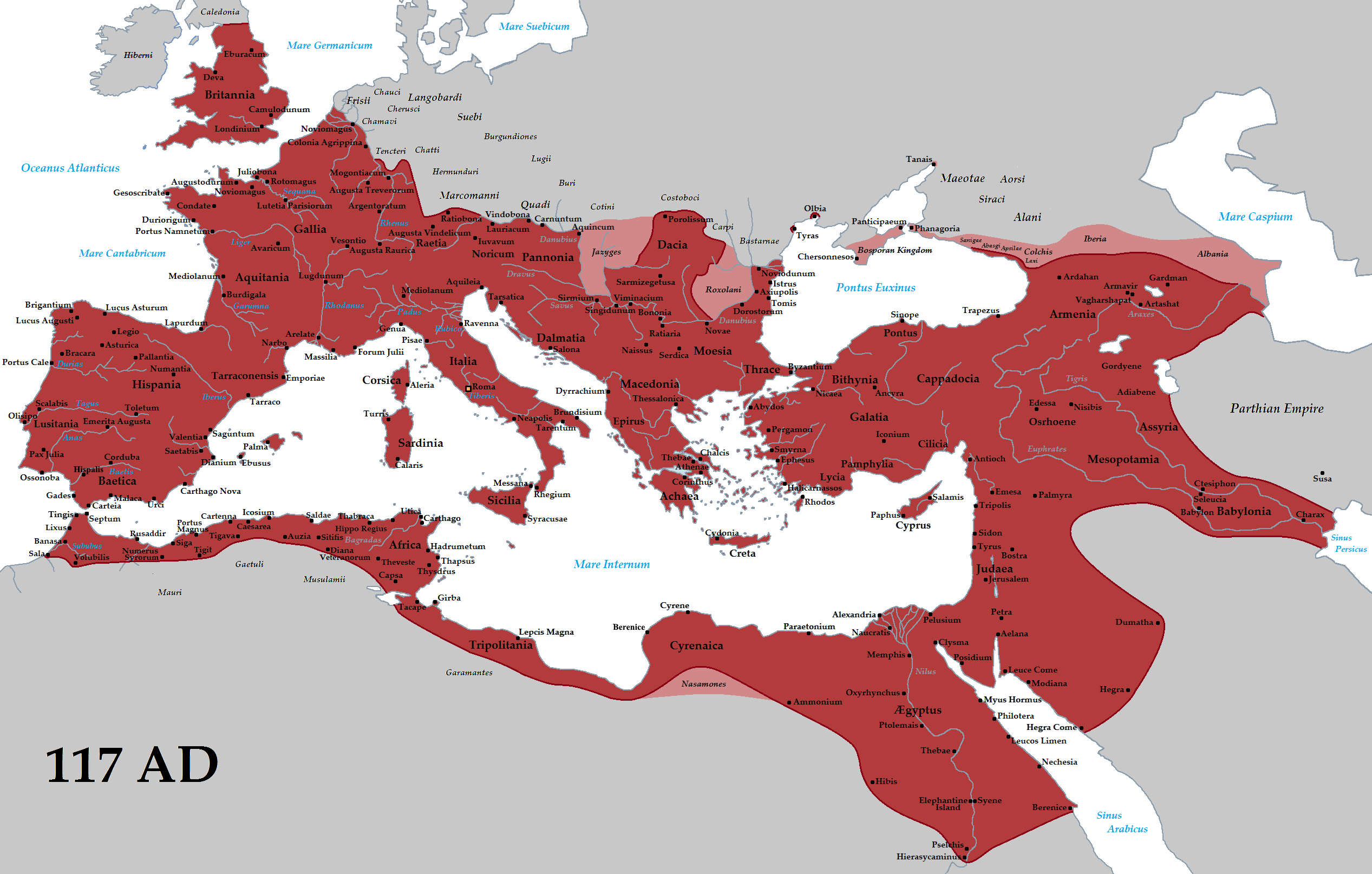
7 After this I kept looking in the night visions, and behold, a fourth beast, dreadful and terrible, and extremely strong; and it had large iron teeth. It devoured and crushed, and trampled down the remainder with its feet; and it was different from all the beasts that were before it, and it had ten horns. (Daniel 7:7 NASB)
Of all the beasts he saw, Daniel is particularly curious and disturbed about the fourth kingdom.
“Then I desired to know the exact meaning of the fourth beast, which was different from all the others, exceedingly dreadful, with its teeth of iron and its claws of bronze, and which devoured, crushed, and trampled down the remainder with its feet, (Daniel 7:19 NASB)
Later, the angel interprets this beast for Daniel, saying:
This is what he said: ‘The fourth beast will be a fourth kingdom on the earth which will be different from all the other kingdoms, and will devour the whole earth and trample it down and crush it. (Daniel 7:23 NASB)
The fourth beast represents the Roman Empire. It is fourth in a numbered sequence of empires that conquered each other. Babylon is named as the first empire (Daniel 2). The Medes and Persians conquered Babylon (Daniel 5). Greece defeated the Medo-Persian empire (Daniel 8). Which leaves the fourth kingdom, who conquered Greece. This was none other than Rome.7
Characteristics of the Historical Roman Empire
The Roman Republic and later, the Roman Empire, was indeed “dreadful” and “terrible” and “extremely strong.” Many groups under Roman occupation refrained from rebellion because of Rome’s intense military might.8
19 “Then I desired to know the exact meaning of the fourth beast, which was different from all the others, exceedingly dreadful, with its teeth of iron and its claws of bronze, and which devoured, crushed, and trampled down the remainder with its feet,
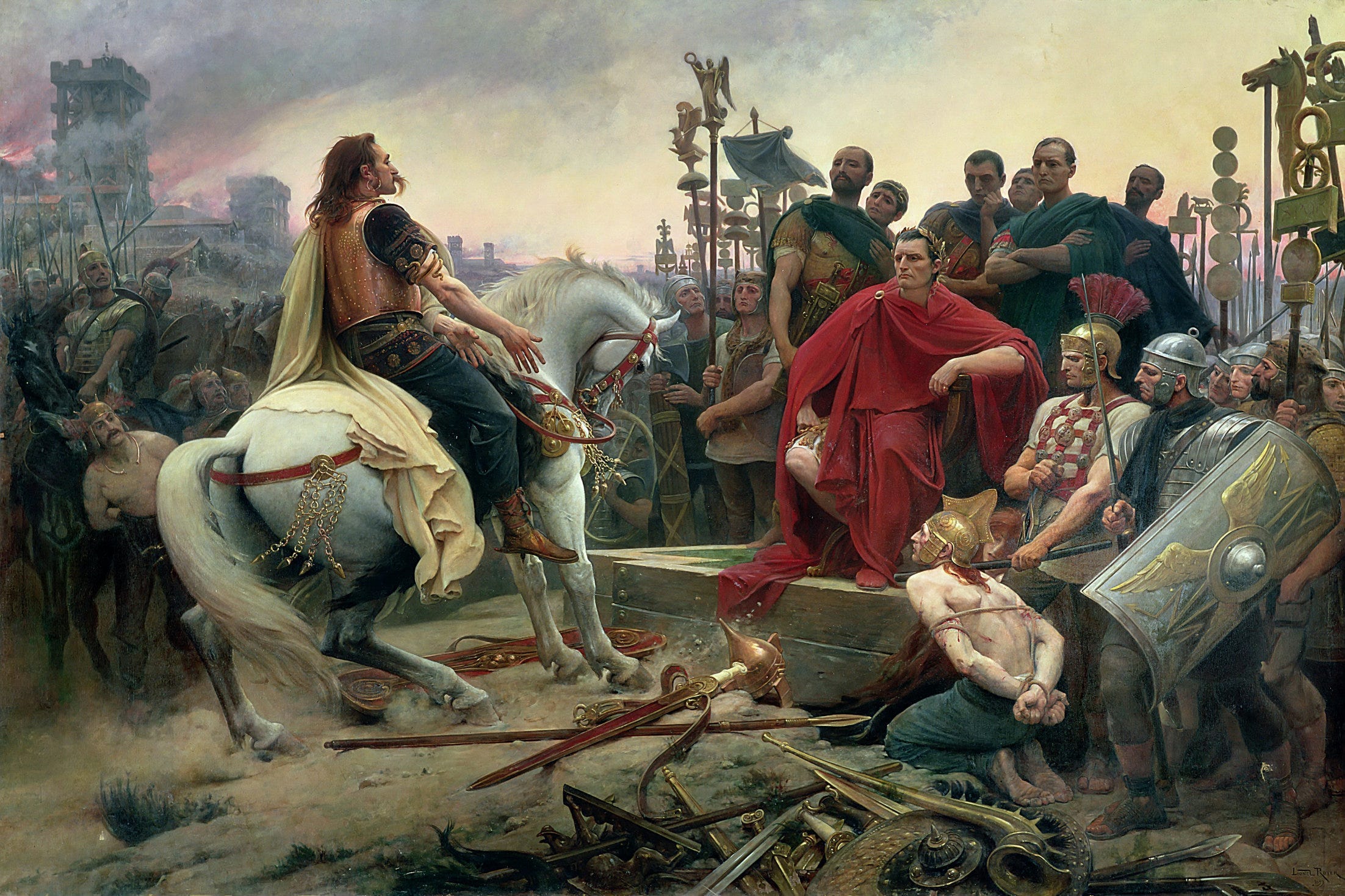
Furthermore, Rome “devoured and crushed” and “trampled down the remainder with its feet.” For example, it wiped an entire Mediterranean empire (Carthage) off the map during the Punic wars.9 Rome was not much more kind to Corinth, which they also razed.10 Furthermore, some researchers consider Julius Caesar’s Gallic Wars to contain elements of genocide and war crimes in modern terms.11 He killed and enslaved up to 2 million people in that conquest.12 Finally, Rome’s treatment of the Jews in 70 AD and later was extremely harsh, resulting in the deaths of hundreds of thousands of Jews and the annihilation of their city and temple.13
Rome was “different from all the beasts that were before it” in that it dominated the whole Mediterranean and lasted about 500 years.14 15Rome was different in size, duration, and machine-like warfare compared to the former three.
It is for these reasons that the vast majority of Bible commentators all the way down from the early Church until the present day identify the fourth kingdom as the Roman Empire. This is true, even though they are sharply divided on other issues of Church doctrine. You can see some quotes that support this idea here, starting with ancient writers all the way up until the present day.
Implausibility of Guessing Rome
In hindsight, it seems easy enough for some ancient writer to guess that the Roman Empire would come after the Hellenistic period. Yet from the perspective of a person in that time period, it was anything but.
From 300 - 165 B.C., the Mediterranean was characterized by conflicts between different kingdoms. You had the Seleucids vs the Ptolemies, the Romans vs Carthage, the Greeks vs the Romans, etc.16
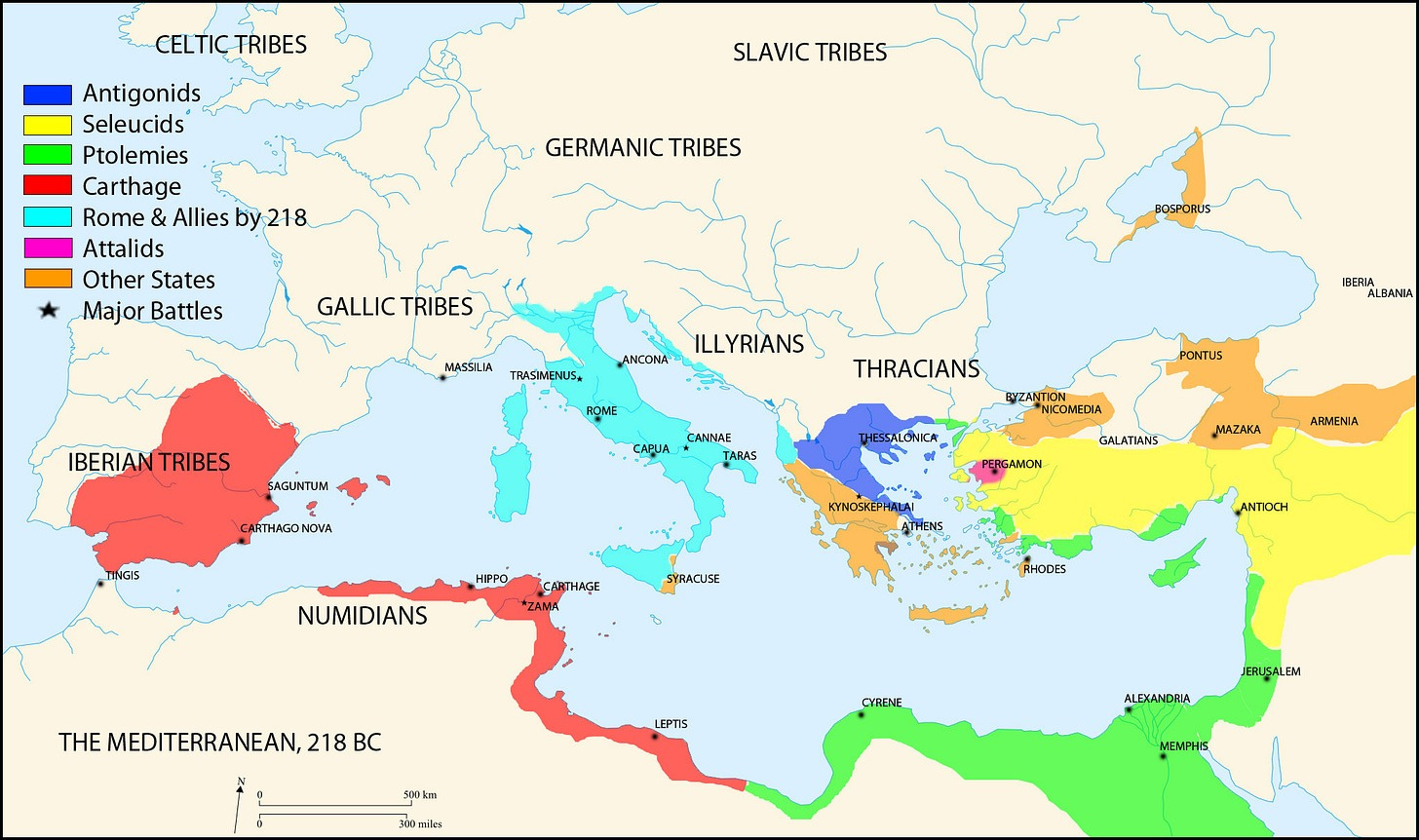


The most likely outcome after the Hellenistic period would be continued warfare by various states against one another. A neutral observer at the time would not necessarily expect an all-encompassing and ruthless empire like Rome.
Yet this is precisely what happened. Not only was it large in scope, but it was also ruthless. This is in contrast to a very large but more tolerant empire (such as Medo-Persia) that preceded it.
The Future Relevance of the Roman Empire
The Roman beast has ten horns. As we will see later, these represent ten kings that come from the Roman Empire. Revelation 17:12 describes them as future from the standpoint of 95 A.D., when John received his Revelation vision.
The ten horns which you saw are ten kings who have not yet received a kingdom, but they receive authority as kings with the beast for one hour.
It is from this context of ten kings that the Antichrist rises to power. This will be explored in another post.
Pentecost, J D. 1985. The Bible Knowledge Commentary: An Exposition of the Scriptures by Dallas Seminary Faculty: Old Testament. Edited by John F. Walvoord, and Roy B. Zuck. Wheaton, Illinois: Victor Books. (p. 1350)
Tanner, J P. 2020. Daniel: Evangelical Exegetical Commentary. Edited by H W. House, and William D. Barrick. Bellingham, Washington: Logos Bible Software. (p. 408)
Tanner, J P. 2020. Daniel: Evangelical Exegetical Commentary. Edited by H W. House, and William D. Barrick. Bellingham, Washington: Logos Bible Software. (p. 410)
Tanner, J P. 2020. Daniel: Evangelical Exegetical Commentary. Edited by H W. House, and William D. Barrick. Bellingham, Washington: Logos Bible Software. (p. 410)
Tanner, J P. 2020. Daniel: Evangelical Exegetical Commentary. Edited by H W. House, and William D. Barrick. Bellingham, Washington: Logos Bible Software. (p. 410)
Miller, Stephen B.. Daniel: An Exegetical and Theological Exposition of Holy Scripture (The New American Commentary Book 18) (p. 210). B&H Publishing Group. Kindle Edition.
Goldsworthy, Adrian Keith. Pax Romana: War, Peace and Conquest in the Roman World (p. 409). Yale University Press. Kindle Edition.
Britannica Editors. “Punic Wars.” Encyclopedia Britannica, October 22, 2025. https://www.britannica.com/event/Punic-Wars.
Britannica Editors. “Corinth.” Encyclopedia Britannica, April 5, 2025. https://www.britannica.com/place/Corinth-Greece.
Raaflaub, Kurt A. (2021) “Caesar and Genocide: Confronting the Dark Side of Caesar’s Gallic Wars,” New England Classical Journal: Vol. 48 : Iss. 1 , 54-80. https://doi.org/10.52284/NECJ/48.1/article/raaflaub
Goldsworthy, Adrian Keith. Pax Romana: War, Peace and Conquest in the Roman World (p. 49). Yale University Press. Kindle Edition.
Goldsworthy, Adrian Keith. Pax Romana: War, Peace and Conquest in the Roman World (p. 410-411). Yale University Press. Kindle Edition.