

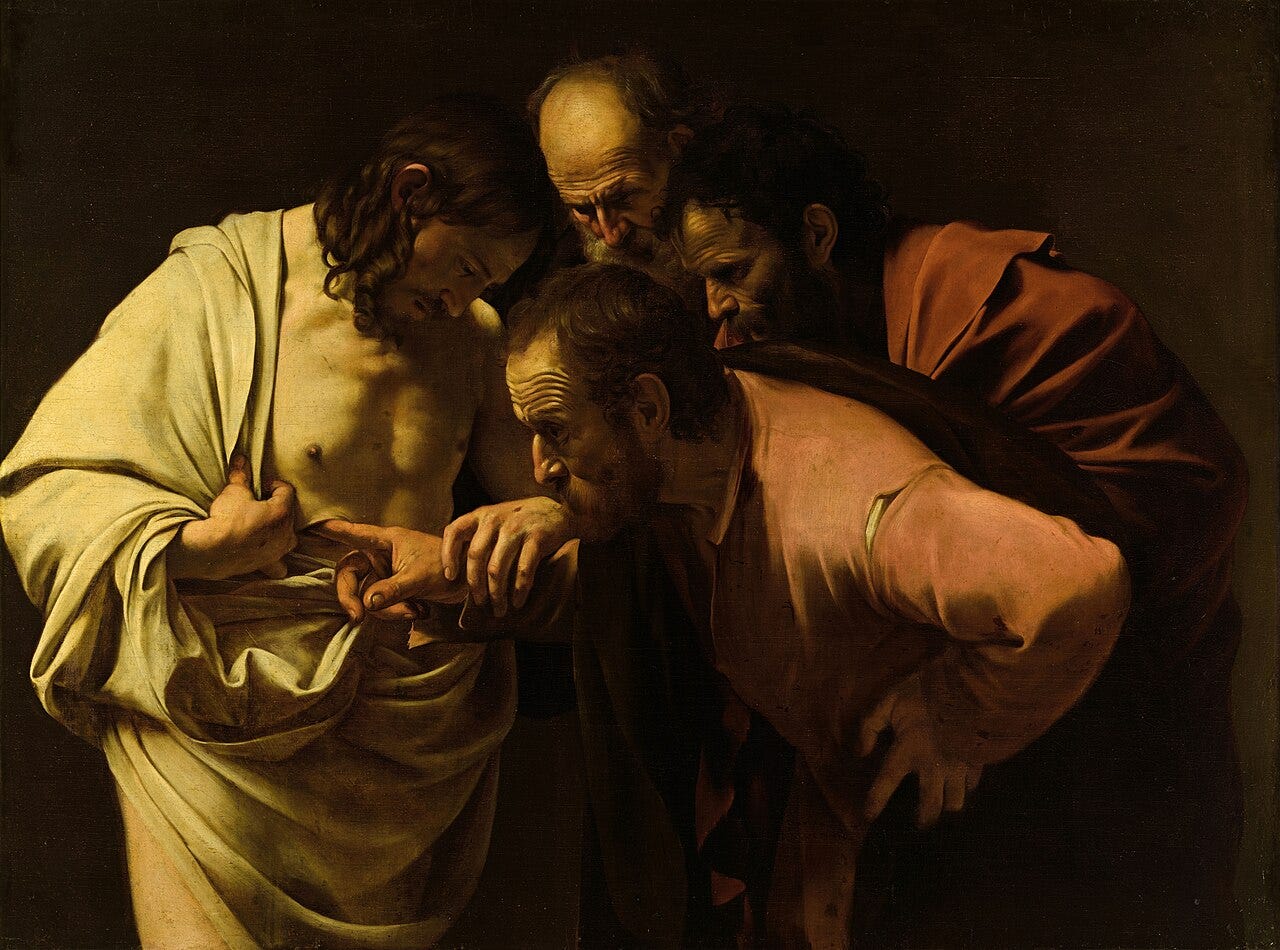
Most people do not appreciate how devastating the crucifixion would have been for the closest followers of Jesus.
The disciples believed Jesus was the promised Messiah: the Son of David, the King of Israel, and the ruler who would one day reign over the nations. That expectation was deeply rooted in the Old Testament. Psalm 2 describes the Lord’s Anointed ruling the nations. Daniel 7 describes “one like a son of man” receiving an everlasting kingdom. Zechariah 9:9 presents Israel’s king coming to Jerusalem in humility.
To the earliest followers of Jesus, that King had arrived. They believed he would redeem Israel, defeat her enemies, end pagan oppression, restore the kingdom, and bring the world under God’s rule. Luke captures their shattered hope after the crucifixion: “we had hoped” Jesus was the one who would redeem Israel (Luke 24:21).
Then, one Friday afternoon, that entire expectation appeared to collapse.
Jesus was arrested, condemned, handed over to Rome, and crucified. The implications seemed obvious. The man they believed would defeat Israel’s enemies had been killed by Israel’s enemies. The King they expected to reign from David’s throne was dead.
Psychology of Failed Apocalyptic Movements
That is where the psychology of failed apocalyptic movements becomes important.
When deeply held end-times expectations fail, people often experience cognitive dissonance: the painful mental conflict that occurs when reality contradicts a cherished belief.1 Normally, that tension is resolved by revising the theory. The failure is postponed, spiritualized, reinterpreted, or explained away.
The classic example is When Prophecy Fails, the famous study of a small apocalyptic group that expected divine rescue before a coming catastrophe. When the prediction failed, the group did not simply vanish; its members reinterpreted the failure in a way that preserved the belief. 2
The Millerites provide another example. When Christ did not visibly return in 1844, the movement fractured, but some followers concluded that the date had not been wrong in every sense; rather, they believed Christ had begun a heavenly sanctuary work instead of appearing visibly on earth. 3
Harold Camping followed a similar pattern after his failed 2011 prediction. When May 21 passed without the expected rapture, he reinterpreted it as a “spiritual” judgment and moved the visible end to October 21.4
A more directly messianic example is the movement surrounding Rabbi Menachem Mendel Schneerson. Many followers believed he was the Messiah. After his death in 1994, some did not abandon that belief; they continued to expect his return or resurrection.5


This pattern is significant.
Failed apocalyptic movements usually do not hallucinate the expected event. They do not simply announce that the visibly failed prediction has publicly happened. They reinterpret. They postpone. They spiritualize. They protect the theory from the facts.
The Uniqueness of the Resurrection
But the disciples of Jesus did something different.
After the crucifixion, they could have said, “Jesus was a great prophet, but we were wrong about him being the Messiah.” They could have said, “He is still the Messiah, but he will rise with everyone else at the end of history,” as Daniel 12 describes. They could have spiritualized the failure and claimed that Jesus had triumphed invisibly in some hidden sense.
Instead, they proclaimed that God had raised Jesus from the dead.
That claim appears very early in Christian tradition. Paul summarizes the message he had received: Christ died, was buried, was raised, and appeared to Peter, the Twelve, James, Paul, and many others.
This is historically significant. The disciples did not merely say that their theory still worked. On the contrary, they said that Jesus appeared to them alive after His death.
Proof that Jesus is Coming Again
The resurrection transformed the crucifixion from apparent defeat into divine vindication. If Jesus had remained dead, the messianic claim would have collapsed. But if God raised him, then the crucifixion was not the end of his kingdom mission. It was the path to his exaltation.
That is why the resurrection is also proof that Jesus is coming again. Paul says Christ’s resurrection is the “firstfruits” of the coming resurrection, and that Christ must reign until every enemy is defeated, including death itself.
Good Friday looked like the death of their hope.
Easter revealed that their hope had not died at all. Jesus had been raised, the King had been vindicated, and the kingdom promised in Scripture was still coming.6
I used ChatGPT 5.5 Extended thinking mode to improve and refine this article.